Painting - A Changed Environment
Messums, Cork St., London, 24 Nov – 20 Dec, 2025
Curator’s Summary
Art is more alive than ever, despite what you may hear or read. Ok so perhaps enough, for now, of the selfreferential observations on consumption, a discourse long circling its finite end. What remains infinite is our evolving understanding of the planet in which we are participants—and the remarkable observations of those explorers who translate shared but unspoken thoughts and feelings into visual language. These are the vanguards of a new enquiry into how we can represent our participation in nature.
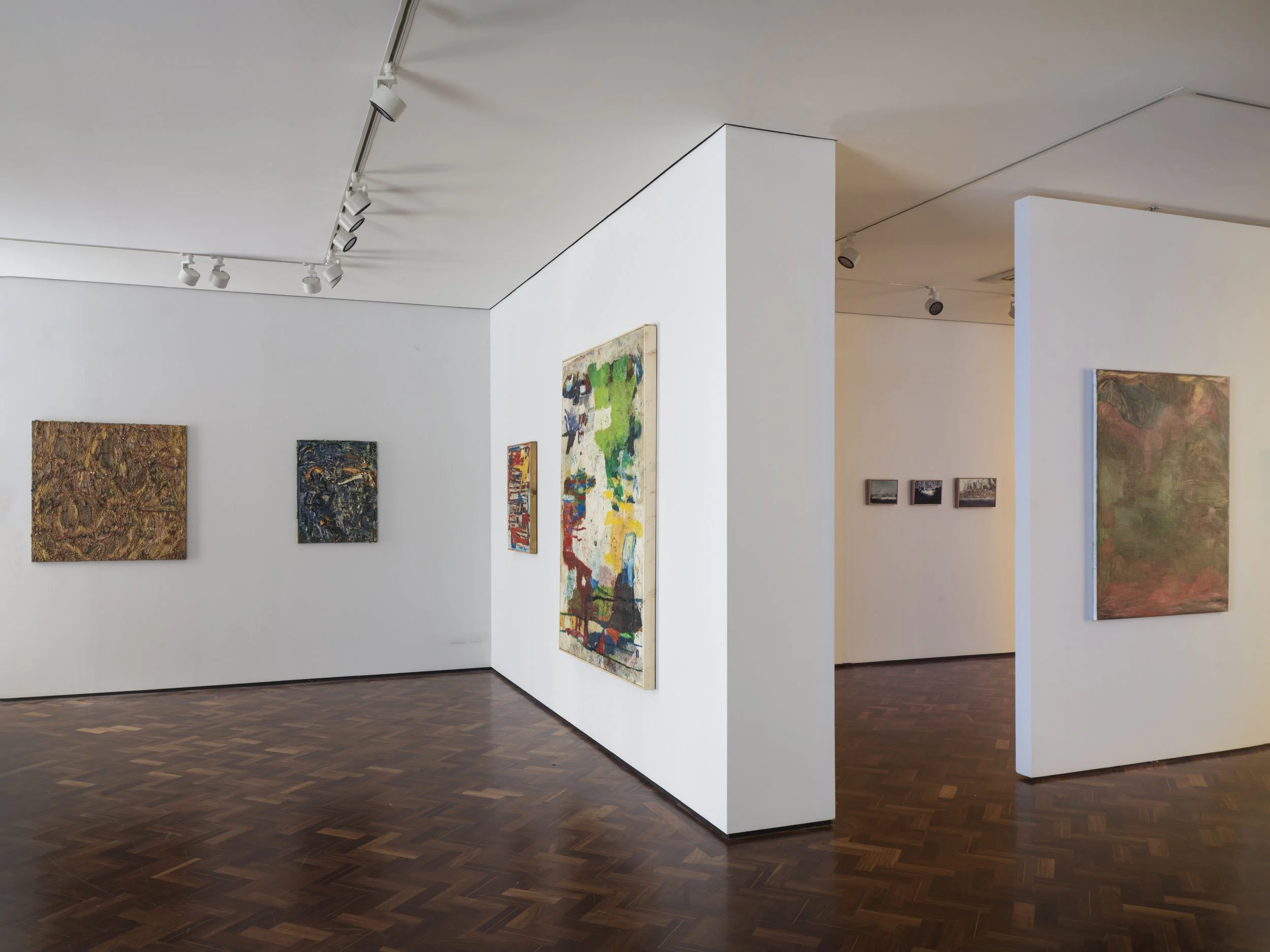
Over forty artists have been selected, with 10 to exhibit in London based on the merit of their collective narrative rather than greater reason. Their practices range from analytical investigations into the act of painting landscape in the work of Eric Matthews who you seen first as you arrive in the gallery to a duet between Elle Jackson and Peter Matthews, who each respond to place in distinct ways: one walking and travelling, gathering material and memory for studio reflection; the other working directly in the landscape, visually recording the moment. Both remain acutely aware of their materials, often returning to and reusing canvas, allowing traces of past processes to carry forward. Across the room, two artists sit in dialogue: Heide Lampenius, whose imagery draws on geometry—the underpinning of all nature—and who creates motifs in graphic patterns that appear to oscillate with time; and Liz Elton, whose temporal work acknowledges that every creative act begins a process of decay, a cyclical truth that is, paradoxically, consoling.
Further conversations unfold elsewhere. The work of Meredith Owens, picks up on the words and emotional content of Robert Macfarlane, a visual description where every mark is a word or maybe a letter and the overall effect is an understanding of landscape that can only be of now, where the past is so adroitly present as well. Her work resonates with that of Cassie Vaughan, our youngest exhibitor and a recent RCA graduate, whose initial marks subconsciously map a relationship to landscape and environment—an instinct embedded in her thinking. The resulting paintings are a form of visual sublimation, connecting to the multiplicity of marks made by Jonathan Freemantle, who in turn conveys a deep sense of presence in landscape and an almost spiritual sensibility shaped by extensive time spent outdoors just being present in the environment.
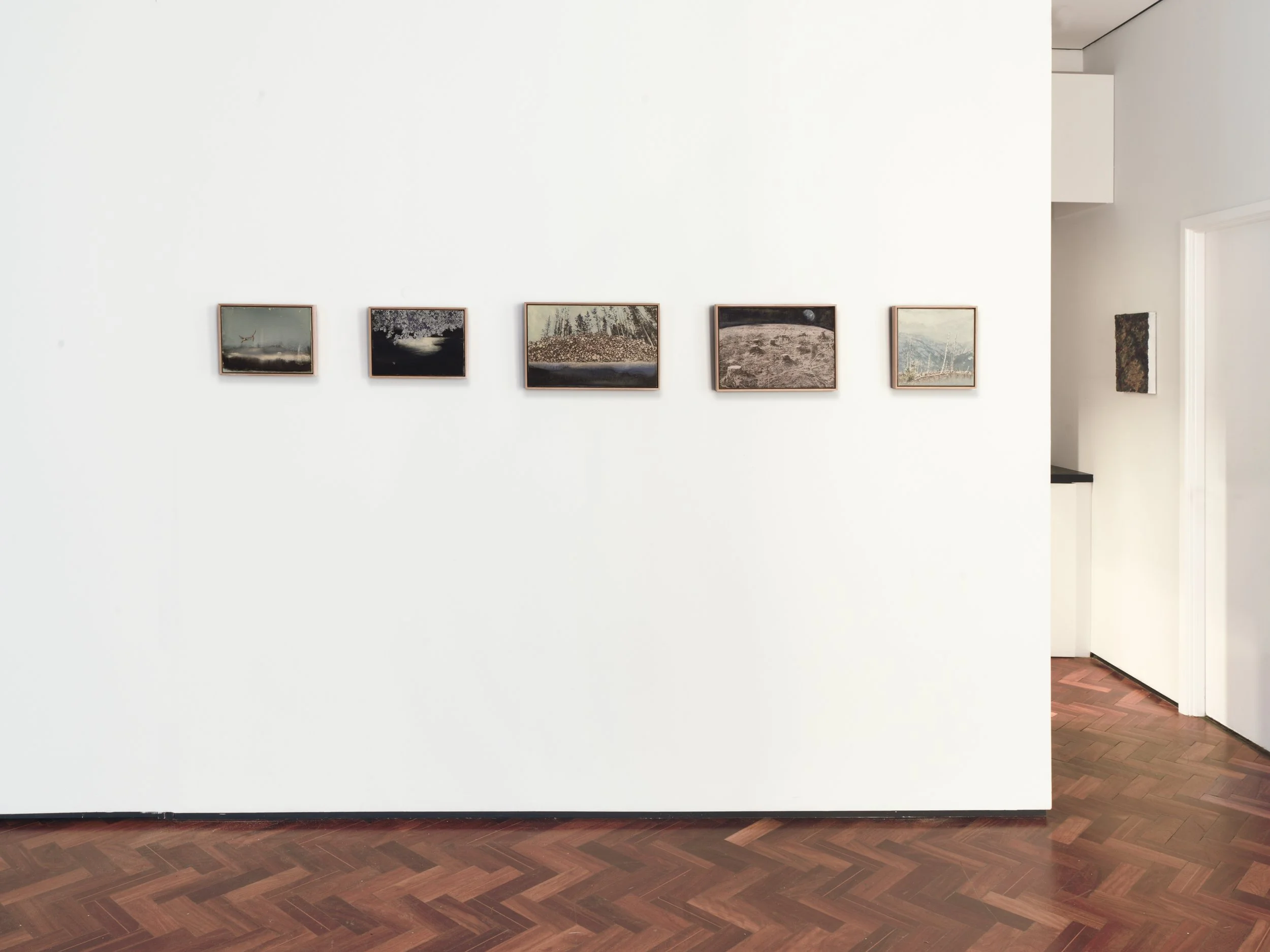
This thematic enquiry continues in the biologically attuned work of Cas Campbell, whose marks and materials capture both our proximity to and our distance from a holistic relationship with nature. These works, like many in the exhibition, are beautiful in their state of uneasy questioning—how it feels to be simultaneously participant and separate. The shifting nature of beauty is further illuminated in the work of Noelle Gallagher. Her paintings emerge from a study of the lifecycle of a managed single-species Sitka forest and its transition back toward a multiculture of interrelated plantings. They are artistically compelling—frank, nonjudgmental and expansive in expression— reflecting the spirit of the artists contributing to the wider series of exhibitions that seek with considerable originality to convey the exciting changes so present in our relationship with landscape.